From
3h agoMorning opening: When the dust settles (a bit)
Jakub Krupa
Hej from Stockholm as the dust settles (a bit) after a hectic election night.
With 95% of votes counted overnight, the left-leaning opposition bloc – led by Magdalena Andersson’s Social Democrats – has widened its lead to three seats, leading 176 to 173 against the reigning centre-right coalition and their far-right partners in Sweden Democrats.
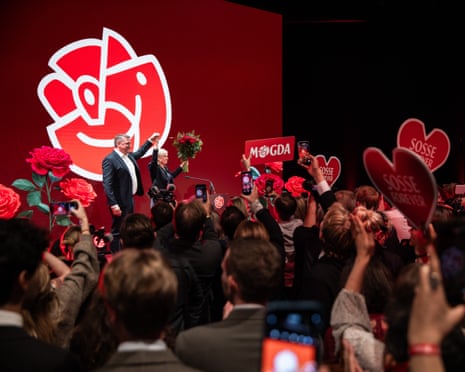
Formally, the result is not settled yet: there is only some 28,600 votes separating the two blocs, with 6% of the votes yet to be counted – and that includes some 200,000 votes expected to come and be counted only on Wednesday.
Still, the Swedish public broadcaster SVT said last night it was 90% confident that the opposition would clinch the victory, even accounting for all the votes yet to be counted.
There is plenty of time for early exploratory talks: the parliament won’t meet until 28 September, when its due to elect a new speaker, and any votes on who could be the next prime minister can only come after that.
But the process of forming the new government could take weeks if not months leaving Sweden in a state of political limbo at a time of unprecedented geopolitical uncertainty in Europe.
No doubt first text messages, frantic WhatsApp or Signals, and phone calls are already exchanged today.
I will be here to cover all this drama for you.
It’s Monday, 14 September 2026, it’s Jakub Krupa here, and this is Europe Live.
Good morning.
Key events
8m ago
The far right’s march to power in Sweden has been halted, but its influence remains - analysis
3h ago
PM Kristersson wants to 'take it easy' and wait until final results
3h ago
Social Democrat leadership meets for talks after election win
3h ago
Morning opening: When the dust settles (a bit)
The far right’s march to power in Sweden has been halted, but its influence remains - analysis
Miranda Bryant
Nordic correspondent
Since the party was founded in 1988, the story of the far-right Sweden Democrats (SD) has been one of such continuous growth that a triumph in Sunday’s general election seemed inevitable.
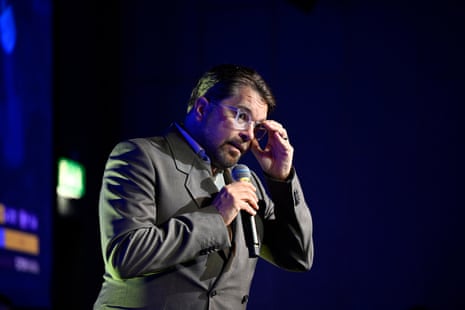
In 2022, they capitalised on electoral gains – and the desperation of right-leaning parties to form a minority administration – and almost made their way into government.
A supporting role in prime minister Ulf Kristersson’s Tidö coalition earned the party, which has neo-Nazi roots, huge influence and mainstream acceptance by the political establishment.
This year’s election had been billed as final confirmation they were no longer pariahs but serious political heavyweights.
Early in the campaign, Kristersson announced that, if his coalition were to win, the SD would take key ministerial positions.
But Sunday’s results suggest the march of the far right into the heart of Sweden’s government has been halted – for now.
Having fallen from Sweden’s second biggest party to third place and, with the right-leaning parties unlikely to be able to form a coalition, the SD appear to have lost their route into government.
So, what has gone wrong for them?
The Centre Party is expected to play an important role in any post-election talks.
Although aligned with the opposition, the party made clear this morning that potential coalition partners – including Magdalena Andersson’s Social Democrats – “will need to see the big picture” and not let fringe powers dictate policy.
The party has long been critical of its potential future government partner in the Left Party, which feels emboldened by its strong election result and expected to demand a shift leftwards and its policies to be reflected by any future administration.
The projected result “shows the voters neither want to an economic turn leftwards, not a large role for the [far-right] Sweden Democrats,” party secretary Hannes Hervieu told SVT.
“There is no demand for fringe politics, but a desire for political stability,” he said, adding that the party would bring these points to the Social Democrats.
Curiously, prime minister Ulf Kristersson made similar noises last night about building an alternative majority around centre-right economic policies, but do not read too much into this: it’s still a very long way to go before that means anything more than just early post-election talk.
Jakub Krupa
While the Social Democrats are understandably raring to take a crack at forming the next government, it’s easy to overlook that, despite coming out on top again, the party has actually lost ground since 2022 – recording its lowest vote share since universal suffrage was introduced in 1921.
With 95% of votes counted, the party sits at 28.1%, down more than two percentage points from 2022 (30.3%) and below its previous low of 28.3% in 2018.
Leader Magdalena Andersson was briefly asked about it last night, but waved these questions away, at least for now, as the focus is obviously elsewhere.
Still, worth noting.
But leading Social Democrats are not exactly impressed by Kristersson’s chill approach.
The party’s foreign policy spokesperson, Morgan Johansson, accused him to trying to “cling on” to power, saying it was an “unsightly” behaviour, Expressen reported.
“If [the governing coalition] Tidö no longer has a majority, he will probably have to face the consequences of that.”
But in a stark warning highlighting just how tricky the government formation process is likely to be, Kristersson also said that if all parties stick to their red lines, “Sweden will not have a government.”
It’s clear he has some appetite for exploring a different majority to the red bloc.
PM Kristersson wants to 'take it easy' and wait until final results
Perhaps we should all just channel the Swedish PM, Ulf Kristersson, who essentially said this morning he was “going to take it pretty easy” until the final results are in.
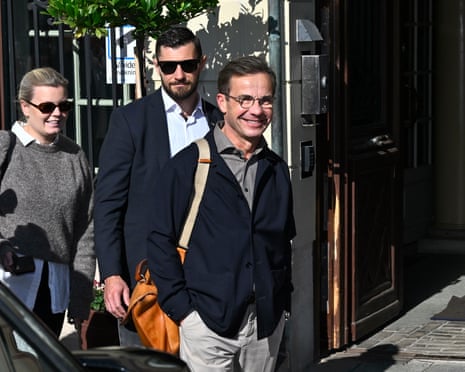
He says there are some conversations scheduled in the meantime – including with fellow coalition leaders this evening – but he essentially wants to see the final results show first.
He also repeats his last night’s suggestion of exploring alternative majorities in the parliament.
One possible option could involve the Centre party switching sides, but it’s not immediately obvious how Kristersson would get them to accept a government with the far-right Sweden Democrats with it.
Social Democrat leadership meets for talks after election win
Senior figures in the Social Democratic party are meeting this morning with party leader Magdalena Andersson to discuss next steps.
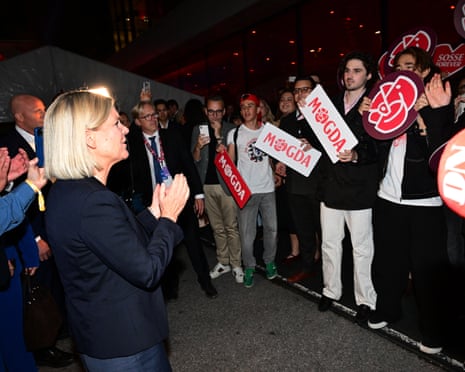
The party topped the polls – that is certain – and is most likely to have a first go at forming the next government, but it will have to navigate the complex and often openly contradictory demands of the left-leaning bloc.
It remains to be seen whether they can get the Left Party to work with the Centre Party in particular, given rumbles on both sides about the feasibility of such an alliance.
But today’s doorstep comments suggest there is no rush just yet: all parties will want to wait for the final results on Wednesday or Thursday before committing to exploratory talks.
Party secretary Tobias Baudin confirmed, however, that he has exchanged texts with colleagues in other parties, SVT reported.
Asked about potential differences, he told P1 that he was “completely convinced” the parties would give it out with some “give and take” for all involved.
Morning opening: When the dust settles (a bit)
Jakub Krupa
Hej from Stockholm as the dust settles (a bit) after a hectic election night.
With 95% of votes counted overnight, the left-leaning opposition bloc – led by Magdalena Andersson’s Social Democrats – has widened its lead to three seats, leading 176 to 173 against the reigning centre-right coalition and their far-right partners in Sweden Democrats.
Formally, the result is not settled yet: there is only some 28,600 votes separating the two blocs, with 6% of the votes yet to be counted – and that includes some 200,000 votes expected to come and be counted only on Wednesday.
Still, the Swedish public broadcaster SVT said last night it was 90% confident that the opposition would clinch the victory, even accounting for all the votes yet to be counted.
There is plenty of time for early exploratory talks: the parliament won’t meet until 28 September, when its due to elect a new speaker, and any votes on who could be the next prime minister can only come after that.
But the process of forming the new government could take weeks if not months leaving Sweden in a state of political limbo at a time of unprecedented geopolitical uncertainty in Europe.
No doubt first text messages, frantic WhatsApp or Signals, and phone calls are already exchanged today.
I will be here to cover all this drama for you.
It’s Monday, 14 September 2026, it’s Jakub Krupa here, and this is Europe Live.
Good morning.