The Southport killer Axel Rudakubana has been moved from prison to a psychiatric hospital after an assessment by psychologists, the Guardian can disclose.
He was transferred to Broadmoor high-security hospital from the category A prison Belmarsh this week after it was concluded that he could not be managed safely in a prison environment, sources confirmed.
People in psychiatric units such as Broadmoor are treated as patients rather than prisoners. A Ministry of Justice spokesperson said he would remain locked up and is unlikely to ever be released.
The move is likely to anger many of the families of his victims, who will argue he was assessed as fit to stand trial in January 2025.
It means the cost of his incarceration will rise. Costs for patients in hospital secure units are more than £300,000 each a year, compared with about £60,000 for prisoners, Whitehall sources said.
Rudakubana, 19, from Banks, Lancashire, was jailed for life in January 2025, with a minimum sentence of 52 years, for the “sadistic” murders of Elsie Dot Stancombe, seven, Bebe King, six, and nine-year-old Alice da Silva Aguiar.

He attacked eight other children, the class instructor Leanne Lucas, and businessman John Hayes, who had tried to disarm him at a Taylor Swift-themed dance class on 29 July 2024 in Southport. He was also found guilty of producing the biological toxin ricin and of possessing an al-Qaida training manual, an offence under the Terrorism Act.
Alder Hey children’s NHS foundation trust confirmed Rudakubana had been under its care as a mental health patient between 2019 and 2023, when he “stopped engaging”. He was referred to them after taking a knife to school and later saying he had done so “to use it”.
He was also referred to the UK’s counter-extremism programme, Prevent, because he had been researching school massacres on a computer at his next school, the Acorns.
There were two other referrals to Prevent, but none were progressed as Rudakubana had no clear ideology behind his obsession with violence.
In May 2025, Rudakubana attacked a prison officer with boiling water, sparking an internal inquiry at Belmarsh.
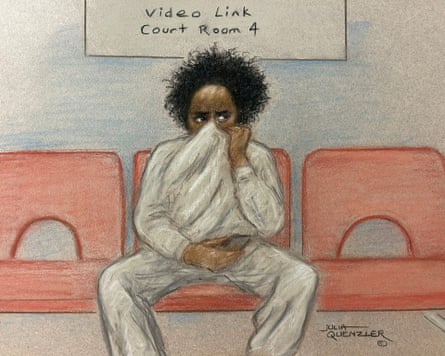
Responding to the move to Broadmoor, Mark Fairhurst, the national chair of the POA union, which represents prison, correctional, and secure psychiatric workers, said his members believed he was “playing the system” so he could move to a more comfortable environment.
He said: “[Rudakubana] is not mentally unwell. He is playing the system and is nothing more than evil. He should spend his entire sentence in solitary confinement staring at four walls.
“It is appalling to think that he will now enjoy all the freedoms a secure hospital is forced to give him and even more unjustified is the taxpayer actually paying him benefits because he is now classed as mentally unwell.
“It is POA members who will now have to carry out the wishes of those who think he can be cured. This is a sickening development and my thoughts are with the families of the victims and all those who have been affected by his atrocious crime.”
Broadmoor, in Crowthorne, Berkshire, is the oldest of England’s three high security psychiatric hospitals. It has been used to hold some of the UK’s most notorious murderers, including Peter Sutcliffe, the Yorkshire Ripper.
Patients remain locked up, with conditions heavily regulated by strict physical security including locked wards, monitored by staff and 24-hour CCTV. They receive mandatory therapeutic and rehabilitative programmes. If offenders no longer require treatment in hospital, the 1983 Mental Health Act provides for a swift return to prison.
If an offender presents an increased risk and cannot be managed safely in a prison environment because of a mental disorder, a request to be moved to a secure psychiatric unit can be made by clinical professionals.
Sources said the act and the clinical assessments meant ministers had no choice but to accept the request to transfer the prisoner in this instance.
A Ministry of Justice spokesperson said: “The families of those murdered and injured in Southport will be in this country’s heart for ever and our thoughts remain with them.
“The offender who carried out these vile crimes will rightly spend the entirety of his 52-year custodial sentence locked up, and is unlikely to ever be released.
“High secure hospitals are not places of freedom. He will remain under constant supervision in a high-security psychiatric unit, and be returned to prison as soon as possible.
“The transfer of an offender follows a robust independent clinical assessment.”