Sometimes Las Vegas will be a thriving mutant metropolis, others times a sizzling crater
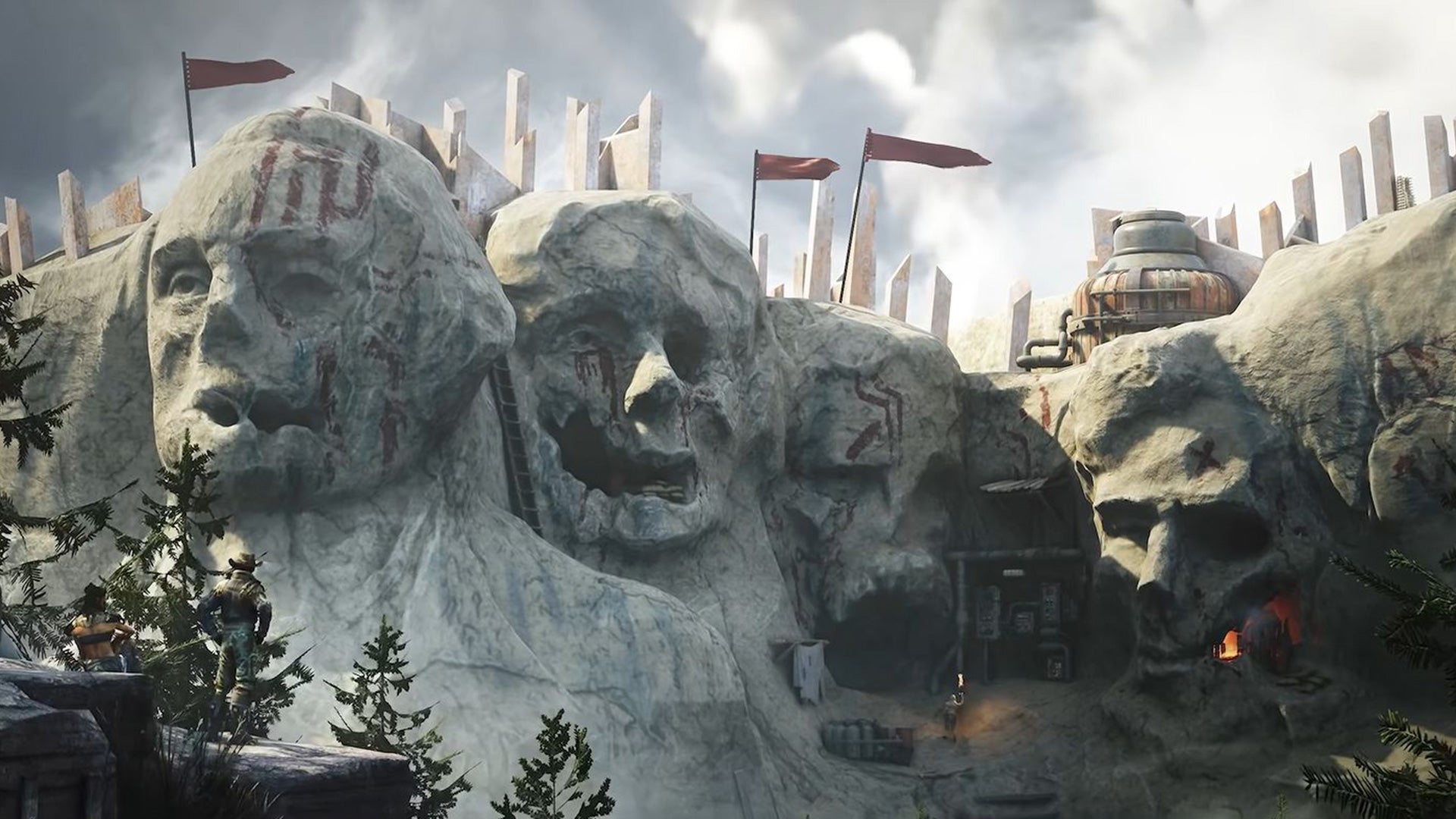
Each time you start a new campaign in Afterworld, Paradox's upcoming post-apocalyptic grand strategy game, a tiny virtual historian cracks their knuckles and gets to work writing a new 200-year history for what happened to North America in the dying days of the great war.
They will decide where the great powers fired their nuclear-tipped missiles, where they released their clouds of flesh-eating nanites, where they dropped their lung-bubbling chemical weapons, and they will decide who survived and who died. These procedural changes should mean that each time you start a new game of Afterworld, the map will be dramatically different from the last.
That flexibility to rewrite the surface of Afterworld is vital, game director Dan Lind tells me, "Otherwise it undermines a lot of the exploration".

Lind uses the desert city of Las Vegas as an example. For a small tribe of survivors, making a journey through the Nevada desert can be a dangerous adventure, but if they know on the other end of that excursion they will find an abandoned city teeming with valuable goods, then smart players will head there every time – "I already know my playthrough," Lind says.
"We could decide to replace a city completely with a giant crater and say Las Vegas was blown up," Lind says, suggesting that little virtual historian decided one of the old nations began the end times by launching a nuke straight at the casino strip. This unpredictability, especially when played out over a vast map – and Afterworld's plotting of the North American continent is massive – makes exploration dangerous and exciting.
"We're trying to make this dynamic so that it's always worth exploring," Lind says. Though, he admits it won't be completely random, the team will "hedge" results, so the virtual historian picks certain paths more often than others. "It'll be very boring if 50% of the time Las Vegas never existed," Lind says. "It's one of those things that's so cool you'd prefer it to mostly be there. But there's many different outcomes – maybe this time it's run by some mutants."

There are other aspects of Afterworld which will remain the same on each run, or at least, if that element appears in the game will appear in the same part of the map. While many of the game's factions and Ancients (individuals who proceed the end times war that wiped out most of humanity) can appear anywhere on the map, others stick to one area. "There's a knightly order up in New England because there's castles there," Lind says. "They wouldn't really spawn somewhere else, it makes no sense."
Changes to Afterworld's map don't stop at the moment your campaign begins. As you might expect of a world that tore itself apart with superweapons, there are quite a few of the doomsday devices still knocking about. These present the opportunity for Risk: Legacy style area denial. "We haven't made content for [nukes] yet but we will definitely do that," Lind says. Though he also cryptically refers to "some other interesting missile weapons the ancients have". Nor is it all destruction in the post-apocalypse: out there to be discovered in the ruins is terraforming technology that, Lind explains, "can turn whole areas into big fertile lands."

I'm still working up my preview of Afterworlds after a trip to Paradox's offices last month. And, while I definitely have reservations about what I played, I am very intrigued by what the developer is trying to achieve with its next grand strategy game. Lind's wanted to make this game for more than a decade because it's a society builder as much as it is a strategy game. "Humans like to think that we're very civilised, [but the apocalypse shows you most of that can go away pretty quickly," Lind says. "If your friends or loved ones are in trouble, you're willing to do a lot of stuff that you can justify to yourself. This is an interesting setting for a strategy game because there's so many tensions. It also opens up the table of 'What is the correct moral code?', 'What is the correct way of living?', 'Which Society is actually good?' If you were just going like, 'Oh, we're a democracy where everything's fine', you're probably gonna get eaten. You need to build some power to be able to have that softness. In our modern world, we're not thinking so much about this."
So, yes, when I force my barely clinging together faction-split tribe to crawl through the Nevada desert only to discover that Las Vegas is overrun with mutants, I will try to convince them that the only moral good is that we eat them. I don't know if that path will lead me to founding a new democratic nation, but it will get me a nice casino city.
Travel and accommodation to Paradox's offices was provided by Paradox Interactive.