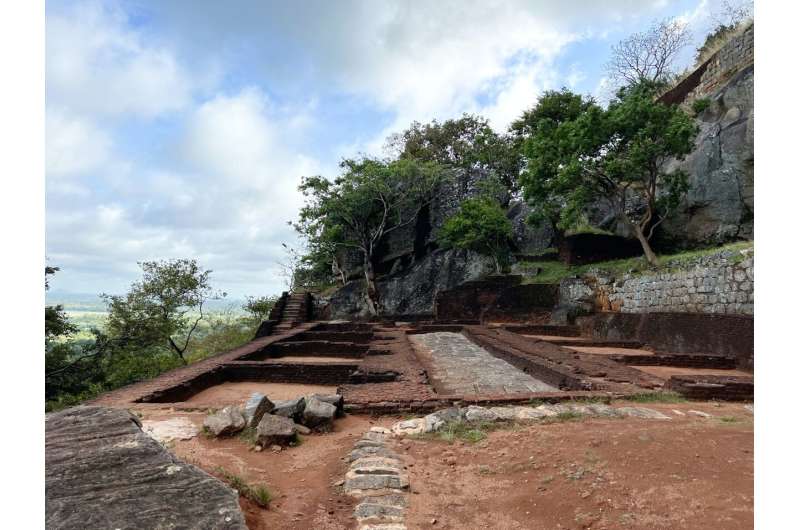
Archaeological excavations generate a vast quantity of documents of various types and formats, which constitute a scientific heritage of great value. However, the way this data is organized, documented and preserved remains highly varied. This is the main conclusion of the article "Research data management practices and perspectives among Catalan archaeologists: a qualitative approach," published in the Journal of Documentation.
The study, led by Sabina Batlle-Baró, a researcher at the Faculty of Information and Audiovisual Media at the University of Barcelona, provides the first qualitative analysis of research data management among those in charge of archaeological projects in Catalonia.
The aim of the study is not to assess the scientific value of the excavations but to understand how teams manage the information they generate throughout the research process. To this end, the author opted for a qualitative methodology based on in-depth, semi-structured interviews with 14 principal investigators of projects carried out at Catalan universities and research centers. This approach allows the study to go beyond a mere description of practices and explore the researchers' motivations, difficulties and perceptions in the face of the new challenges posed by the digitization of archaeology.
The interviews show that digital transformation has dramatically increased the volume and complexity of the data generated during excavations. Photogrammetry, 3D scanners, geographic information systems, databases and digital tools still coexist with manual records that must subsequently be digitized. Faced with this reality, most teams have developed their own systems for organizing, storing and backing up data, tailored to the needs of each project. Although these solutions work satisfactorily on a day-to-day basis, they are often based on informal protocols without shared standards, systematic documentation or data management plans.
The study highlights that this situation hinders the future reuse of data, particularly when the original researchers are no longer part of the teams or when information from different projects needs to be integrated. It also identifies limited awareness of good data management practices, a lack of specific training in this area and the limited use of institutional repositories for the long-term preservation of information. By contrast, researchers place a high value on the support and training services offered by institutions with staff specializing in research data management, which leads to a better understanding of the processes and more robust practices.
One of the most striking findings of the study is the role played by archaeological excavation reports, which are mandatory after every excavation. In addition to communicating scientific findings, many researchers regard them as a means of preserving the original data because they are filed with the authorities. According to the author, this function makes archaeological reports fundamental to the construction and preservation of knowledge in this field, even though their content and level of detail vary greatly from one project to another.
The article concludes that Catalan archaeologists manage data using practical criteria, based mainly on accumulated experience and common sense, but that this approach is insufficient in the face of the new requirements of open science and digital preservation. For this reason, it argues for the need to strengthen training in data management, define common protocols and promote institutional policies that facilitate the preservation, interoperability and future reuse of the scientific information generated during archaeological excavations.
More information
Sabina Batlle Baró, Research data management practices and perspectives among Catalan archaeologists: a qualitative approach, Journal of Documentation (2026). DOI: 10.1108/jd-09-2025-0262
Who's behind this story?

Swati Mestri holds a bachelor's degree in Electronics Engineering and has worked as a content editor since 2019. She has experience editing research documents across technology, health care, and materials science, and has a particular interest in technology and space. Full profile →

Master's in physics with research experience. Long-time science news enthusiast. Plays key role in Science X's editorial success. Full profile →
Citation: Digital revolution forcing archaeology to rethink research data management (2026, July 27) retrieved 28 July 2026 from https://phys.org/news/2026-07-digital-revolution-archaeology-rethink.html
This document is subject to copyright. Apart from any fair dealing for the purpose of private study or research, no part may be reproduced without the written permission. The content is provided for information purposes only.